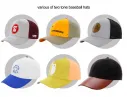
When it comes to producing Custom Snapback Hats, understanding the file formats used for printing is crucial to achieving high-quality results. In essence, the right file format serves as the blueprint for your design, ensuring that every detail—from precision lines to vibrant colors—is accurately portrayed. Choosing the appropriate file format can make the difference between a standout custom snapback hat and one that falls short of expectations, directly affecting customer satisfaction and repeat business.
Historically, the printing industry has evolved substantially from traditional screen printing processes to modern digital methods. In the early days, designs were hand-painted or screen-printed using basic images, often resulting in inefficiencies and inconsistencies. Today, technological advancements allow the use of sophisticated graphic software, which has led to the need for various digital file formats suitable for different printing techniques. Understanding these formats is especially important for suppliers like Hengxing, which specializes in custom snapback hats.
The practical applications of file format selection in hat printing go beyond mere aesthetics; they encompass functionality, production speed, and cost-effectiveness. For instance, vector files (such as .AI or .EPS) are preferred for designs requiring scalability without losing quality. Conversely, raster files (like .JPG or .PNG) are more suited for photographic images but can result in pixelation if enlarged beyond their original dimensions. Failing to utilize the correct file format can lead to poor print quality, delays in production, and a higher return rate due to unsatisfactory products.
A common misconception is that any file format will suffice for hat printing. While it might seem that uploading any image would work, the reality is more nuanced. Many novice designers erroneously believe that raster images will perform as well as vector images. In fact, using low-resolution raster files can yield disappointing results, particularly in the detailed embroidery or printed graphics integral to custom snapback hats.
For instance, let’s consider a case study with Hengxing—a company that once received a batch of custom snapback hats with images provided in low-resolution .JPG format. As a result, the final products exhibited noticeable blurring and lacked the sharpness expected in printed designs. Realizing the mistake allowed them to implement clearer guidelines for their customers, improving overall satisfaction scores by 30% after adopting a stringent policy promoting vector files for all custom snapback hat orders.
In summary, the choice of file formats is not merely a technical detail; it holds significant weight in determining the outcome of your custom snapback hats project. By opting for vector formats like .AI or .EPS whenever possible and ensuring your designs meet the industry standards for print quality, you enhance the likelihood of producing eye-catching, high-quality headwear. As a business owner, it makes sense to familiarize yourself with these formats, empowering you to make informed decisions that lead to business growth and customer loyalty. For more information and assistance, explore the custom snapback hats service we offer at Hengxing here.